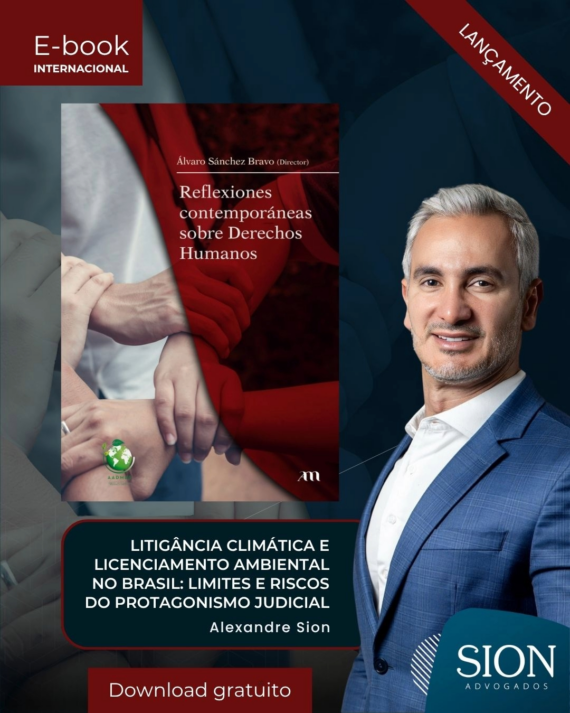
The article titled “Climate Litigation and Environmental Licensing in Brazil: Limits and Risks of Judicial Protagonism” examines the increasing judicialization of climate issues in Brazil and its effects on environmental licensing. Alexandre Oheb Sion analyzes the limits of the Judiciary’s role in incorporating the climate variable into these processes, highlighting that climate litigation, while relevant for environmental protection, can generate risks when it replaces the actions of the Executive and Legislative branches.
Based on decisions such as ADPFs 708 and 760, the author points out that judicial activism in climate matters can disrupt the licensing system and generate regulatory uncertainty. He concludes that the climate issue should be addressed within the scope of public policies—and not environmental licensing—with the State being responsible for formulating its own strategies for mitigating and adapting to climate change, without transferring this responsibility to the Judiciary.